Yeti Cycling wants to get rid of the shock. A US patent application published on 24 September 2026, number US 2026/0285439 A1, describes a two-wheeled vehicle suspension that resists wheel movement with a rotary mechanism sitting in a pivot axis, instead of a coil or air shock that compresses in a straight line. The filing names Peter Zawistowski, a long-time Yeti engineer, as inventor and runs to 122 sheets of drawings.
How the Yeti rotary damper works
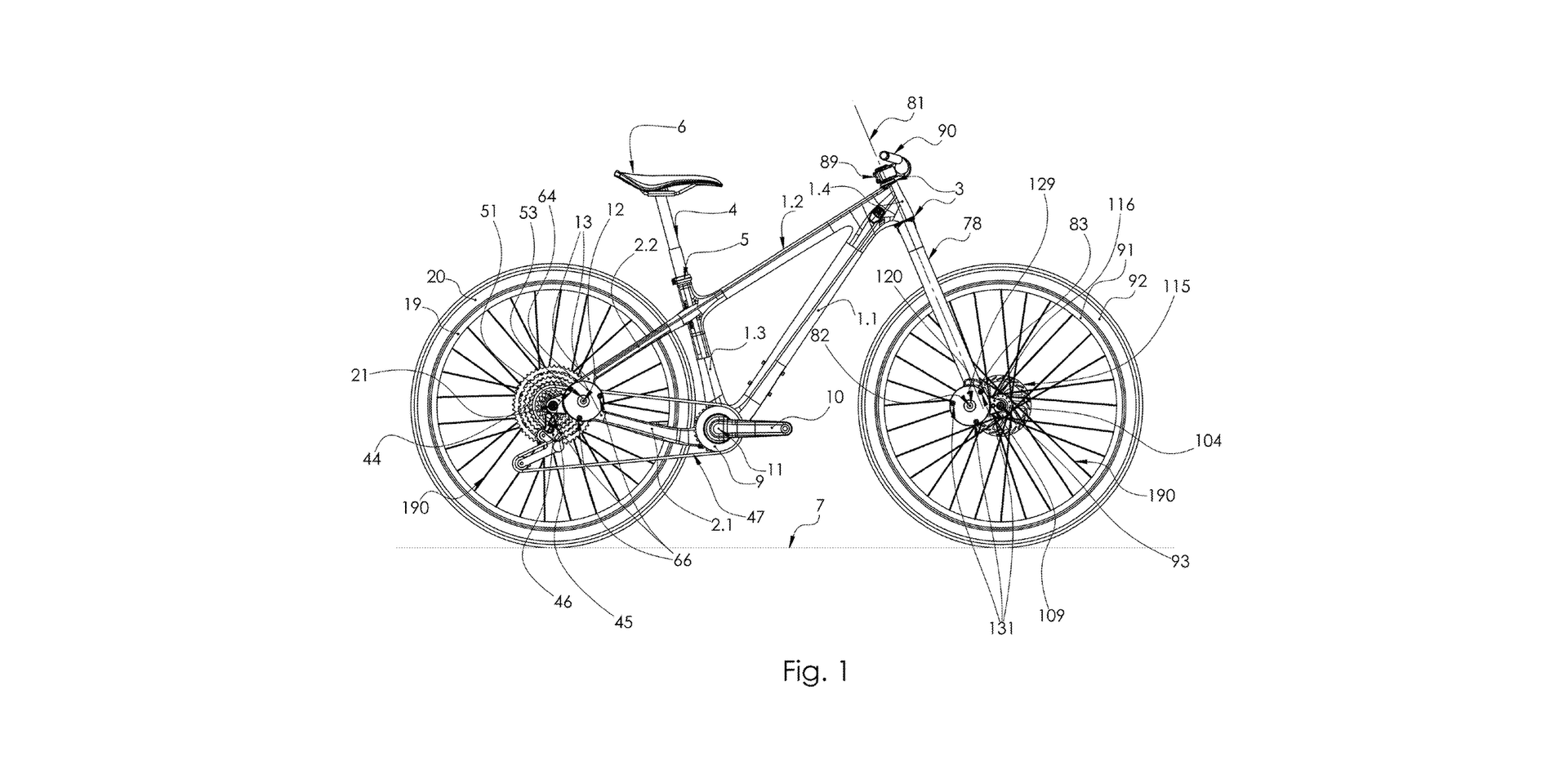
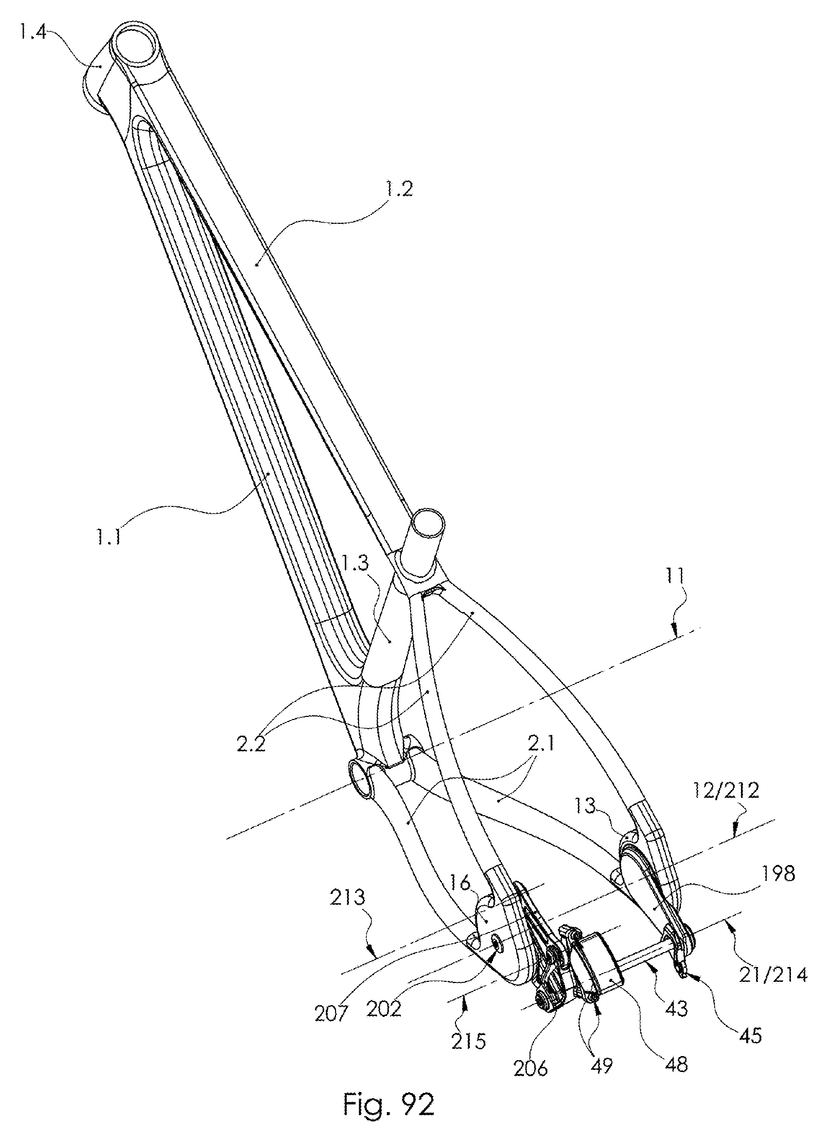
The main drawings show a bike that looks like a hardtail at first glance. The front and rear triangles are one rigid piece, and the fork is rigid. The movement happens right at the axles: a short wheel carrier pivots on a structure near the dropout, and a rotary cartridge in that pivot applies torque against it. The front end gets the same treatment, with its own wheel carrier and cartridge near the hub.
The first claim is about packaging. Seen from the side, the rotary mechanism overlaps the brake, and in some versions the cassette too, for at least part of the travel. A second group of claims puts all the suspension joints inside the outer diameter of the tyre, with at least four and in some versions seven joints, and a brake carrier that can be separate from the wheel carrier.
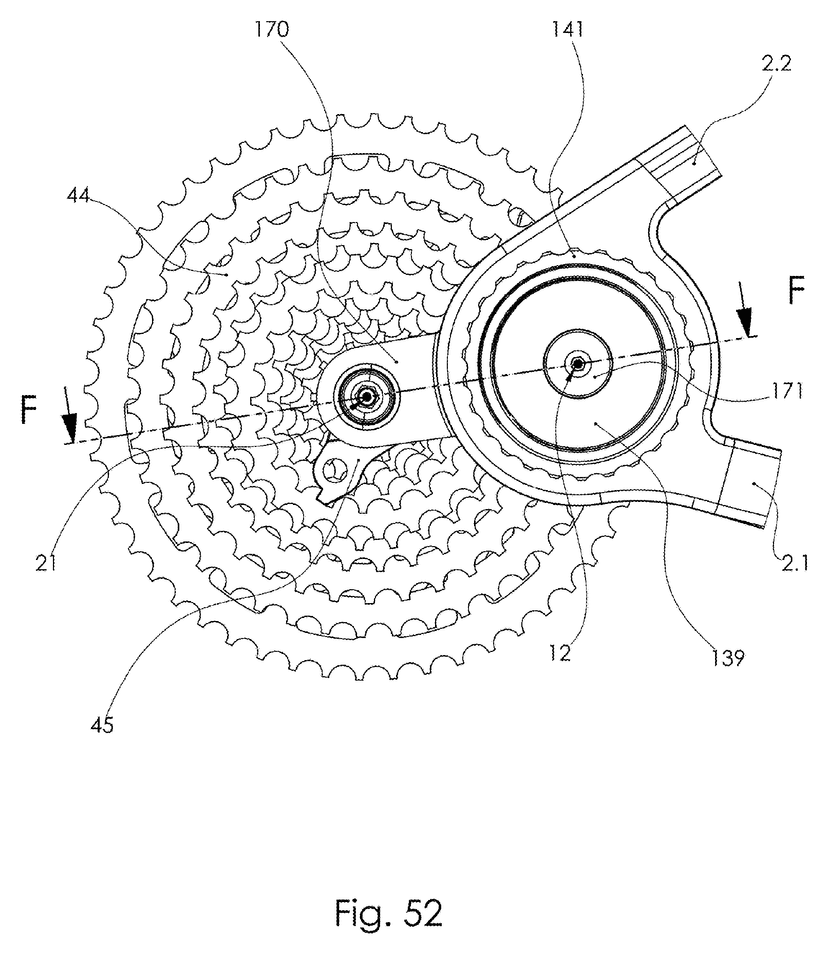
Yeti describes several cartridges that fit the same housing: elastomers with top-out bumpers, a fluid damper with compression and rebound valves on the rotor or stator blades, an air spring, and a coil or torsion spring. A later rear version adds access points for low- and high-speed compression valves on the pivot structure, and a front version is drawn with anti-dive behaviour.
Short travel, with room to grow
The numbers point away from long-travel bikes, at least for now. Some versions offer roughly 5 to 75 mm of travel, and the worked example uses 30 mm of vertical wheel travel at the rear. The text adds that more than 150 mm is also possible. Yeti's stated reasons are packaging: linear shocks get in the way of bottles, frame bags and other parts, and bigger wheels, which the filing lists up to 32 and 36 inch, leave less room in the front triangle.
E-bikes, eMTBs and pedelecs appear in the list of vehicles the idea could apply to, alongside bicycles and motorcycles, and the text says it also covers bikes driven partly by a motor. No motor or battery is part of the design itself.
Patent application at a glance
- Number
- US 2026/0285439 A1
- Applicant
- Yeti Cycling, LLC (Golden, Colorado)
- Inventor
- Peter Zawistowski
- Filed
- 19 March 2026 (provisionals from 20 March and 6 November 2025)
- Published
- 24 September 2026
- Cartridge types
- Elastomer, fluid damper, air spring, coil or torsion spring
- Travel in examples
- About 5-75 mm; over 150 mm mentioned as possible
- Status
- Application, not a granted patent; no product announced
Our take
A patent application is not a product, and Yeti has announced nothing. What makes this one worth a look is the direction. Yeti's current long-travel eMTB, the Yeti LTe, uses the Sixfinity six-bar linkage and a conventional shock, as we covered in our guide to eMTB rear suspension designs. Moving the damper to the axle would free the frame completely, which on an eMTB matters because the down tube is already full of battery.
The open questions are the ones any axle-mounted damper faces: more moving mass at the wheel, heat from a brake rotor a few centimetres away, and sealing against mud and water. With tens of millimetres of travel in the examples, a gravel or XC bike looks a likelier first use than an enduro eMTB.

32 years of riding experience, from a school bike to today's high-tech e-MTBs. My goal is to build the most complete and accessible e-MTB catalog to make choosing easier, and to bring our readers the latest news.