The European bike and motorcycle industry wants Brussels to hit pause on one of the toughest parts of the EU Batteries Regulation. On 23 November, the motorcycle makers' association ACEM and European Cycling Industries (ECI) asked the European Commission to table a one-article "stop-the-clock" regulation before the end of November. It would push back the requirement that individual cells in e-bike battery packs be replaceable from 18 February 2027 to 18 February 2028.
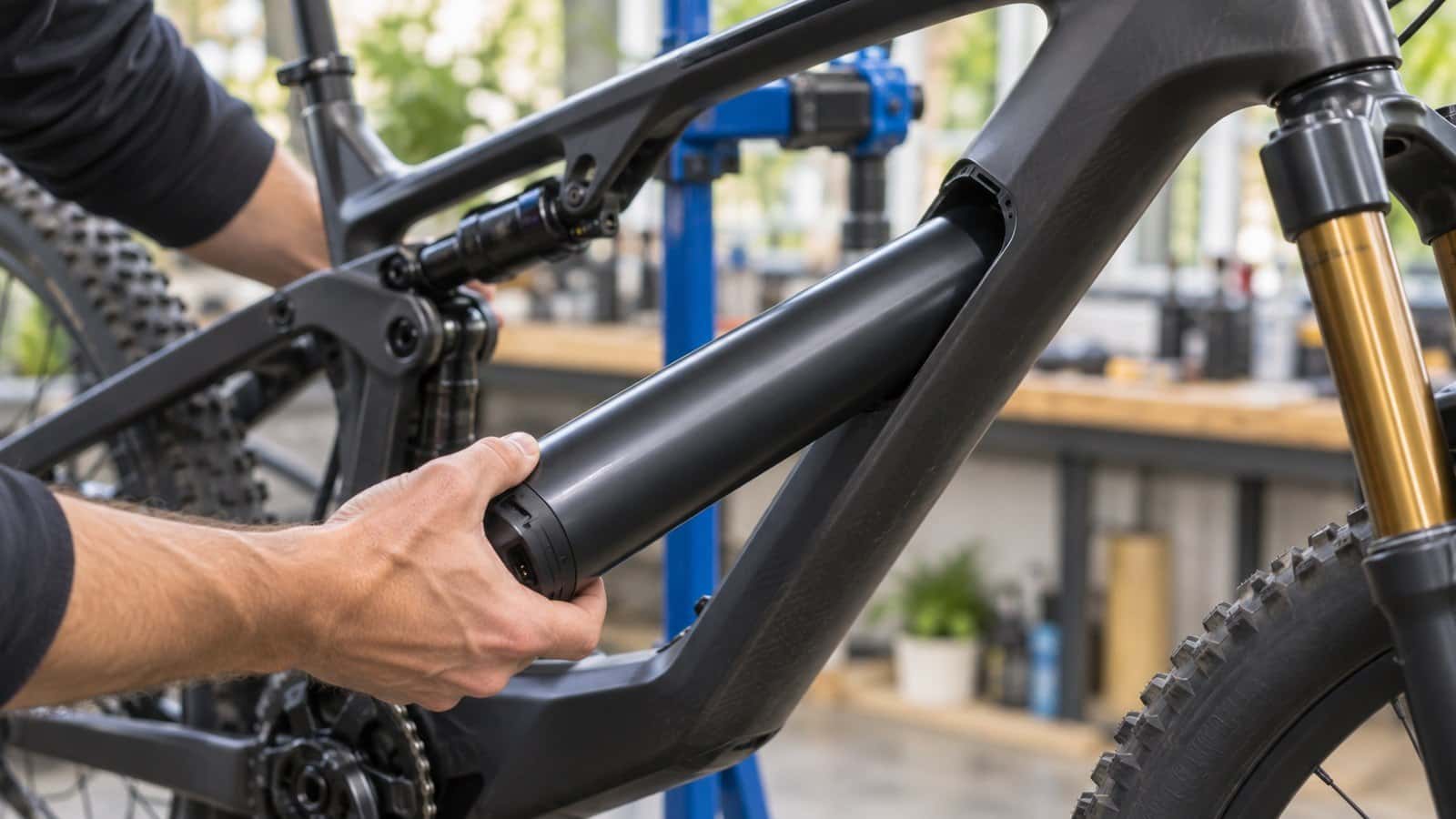
The rest of the rule wouldn't move. From February 2027 the battery of every e-bike, e-MTB included, still has to be removable and replaceable as a complete pack.
What the EU Batteries Regulation requires today
Regulation (EU) 2023/1542 puts e-bike packs in the "light means of transport" (LMT) category: sealed batteries of up to 25 kg that power wheeled vehicles. Article 11(5) says these batteries, "as well as individual battery cells included in the battery pack", must be readily removable and replaceable by an independent professional at any point in the product's life.
The same article adds a few things riders will like. Replacement batteries must stay available as spare parts for at least five years after the last bike of a model goes on sale, at a reasonable and non-discriminatory price. Software can't be used to block a replacement either, so a brand can't lock its motor to a single serial-numbered pack.
The pack part is easy for most current eMTBs, since nearly every full-power bike already has a battery a shop can pull out. The cell part is the problem. As written, it means a workshop must be able to open a pack, take out one weak cell and fit a new one.
Why the industry wants more time
The makers' main argument is safety. In their joint letter, ACEM and ECI say manual disassembly and cell-level replacement bring serious thermal runaway and fire risks during repair. An earlier ECI position paper goes further. Opening a pack breaks its sealing and safety system, and a new cell sitting next to old ones causes imbalance and lithium plating. A shop also can't match cells by voltage and production batch the way a factory does. The paper adds that a repaired pack can't be type-tested again under UN transport safety rules, and that the original maker can't take on liability after a third party has been inside the battery.
The industry also points out that single cells rarely fail. Most industry reports put individual cell failures at under 1% of battery faults.
The Commission doesn't disagree in principle. In its Environmental Omnibus proposal (COM(2025) 981), it already proposed replacing cell-level replaceability with replacement at module level. The Council agreed its negotiating position on 24 June 2026, but the vote in the Parliament's environment committee has been postponed. The omnibus can't enter into force before February 2027, so without a stop-the-clock the cell requirement would legally apply for a while, only to be removed later.
LMT battery rules at a glance
- Whole pack replaceable
- From 18 February 2027 (unchanged)
- Single cells replaceable
- 18 February 2027 now; 18 February 2028 if the delay is adopted
- Longer-term plan
- Module-level replacement (Environmental Omnibus, under negotiation)
- Spare batteries
- At least 5 years after the last unit of a model is sold
- Software lock-in
- Banned for battery replacement
- QR code and battery passport
- From 18 February 2027
- Carbon footprint declaration
- From 18 August 2028 at the earliest
Based on Regulation (EU) 2023/1542 and the ACEM-ECI joint position of November 2026.
What changes if the delay is adopted
To work, the stop-the-clock has to move fast. The associations suggest the Parliament could use its urgent procedure at the December 2026 or January 2027 plenary, with the Council signing off by written procedure, so the change can be published before 18 February 2027. That only works if the Commission tables its proposal this month. EU institutions have done this before: one recent battery rule change went through in ten weeks.
If it passes, little changes for riders in 2027. New eMTBs will still need a pack an independent shop can swap, spare batteries for five years and no software locks. Brands won't have to redesign packs for cell-level access, and shops won't be expected to open batteries. Assuming the omnibus is adopted in the meantime, the cell rule would then be replaced by module-level repair before it ever applies.
And if it isn't
Without a delay, the cell requirement applies from 18 February 2027 as written. Brands would need packs that can be opened and re-celled by independent professionals, and shops would be pushed into work most of them aren't equipped or insured for. For owners, a pack with one weak cell could legally be repaired instead of replaced, which is cheaper in theory. The industry's fear is the practical side: a pack that's been opened, with no warranty from the original maker and a higher risk of failure.
Makers have also asked riders not to have packs repaired by unauthorised workshops, and that advice won't change whatever happens in Brussels.
Carbon footprint rules on the way
There's a second strand to the regulation. The Commission's Joint Research Centre (JRC) is drawing up the method for calculating the carbon footprint of LMT batteries. Under Article 7 the Commission has to adopt this methodology by 18 February 2027, and e-bike makers will have to publish a carbon footprint declaration from 18 August 2028 at the earliest. Performance classes follow from 2030 and a maximum carbon footprint limit from 2031.
Our take
The pack rule is the part that matters most to eMTB owners, and it isn't going anywhere: removable batteries, five years of spares and no software locks are good news. Re-celling packs in a high-street workshop was always hard to square with safety, and even the Commission now wants module-level repair. A one-year delay is a sensible fix for a timing problem, but the Commission has to move this month or the cell rule will apply anyway.
If your bike throws battery faults in the meantime, our e-bike error code guide and battery components section are a good place to start.

32 years of riding experience, from a school bike to today's high-tech e-MTBs. My goal is to build the most complete and accessible e-MTB catalog to make choosing easier, and to bring our readers the latest news.